


Turning strategy into action for people, planet, and progress
How We Approach Sustainability
At TBS, sustainability is our foundation. We focus on TBS2030, stakeholder priorities, strong governance, and a culture of sustainability. This guides our decisions in renewable energy, electric mobility, and waste management.
Our Roadmap: TBS2030
Defines clear milestones toward a low-carbon, inclusive future
Our Material Priorities
Focus areas shaped by double materiality assessment and stakeholder input
Our Governance & Oversight
Board and management responsibility ensures transparency and accountability
Our Transformation Journey
Shifting from coal to renewable energy, EV ecosystem, and waste management
Our Material Priorities
In 2023, TBS completed its second materiality assessment using a double materiality approach, reaffirming our commitment to sustainability leadership in the region. This assessment was developed in line with GRI 2021 Standards and informed by the draft European Sustainability Reporting Standards (ESRS), ensuring our strategy contributes meaningfully to the UN Sustainable Development Goals.
1 | Emissions and Climate Opportunities |
1.1 | |
1.2 | Climate Adaptation and Resilience |
1.3 | Air Pollution |
2 | Water Usage |
3 | Waste Disposal |
4 | Land Rehabilitation |
5 | Biodiversity and Valuing Natural Capital |
6 | Local Communities |
7 | Human Rights |
8 | Affordable Clean Power |
9 | Improving Urban Mobility with EV Business |
10 | |
11 | Occupational Health and Safety |
12 | Access to Clean Water |
13 | Governance |
14 | Value Chain Management |
15 | |
16 | Data Privacy |
17 | Capital Risks and Opportunities |
17.1 | Trust and Reputation Risks |
17.2 | ESG Disclosures and Mandates as Risk |
17.3 | Transition Financing |
18 | Business Model Transition and Innovation |
18.1 | Waste Management |
18.2 | Electric Vehicles |
18.3 | Waste-to-Energy |
18.4 | Green Hydrogen |
18.5 | Land-based Nature-based Solutions |
19 |
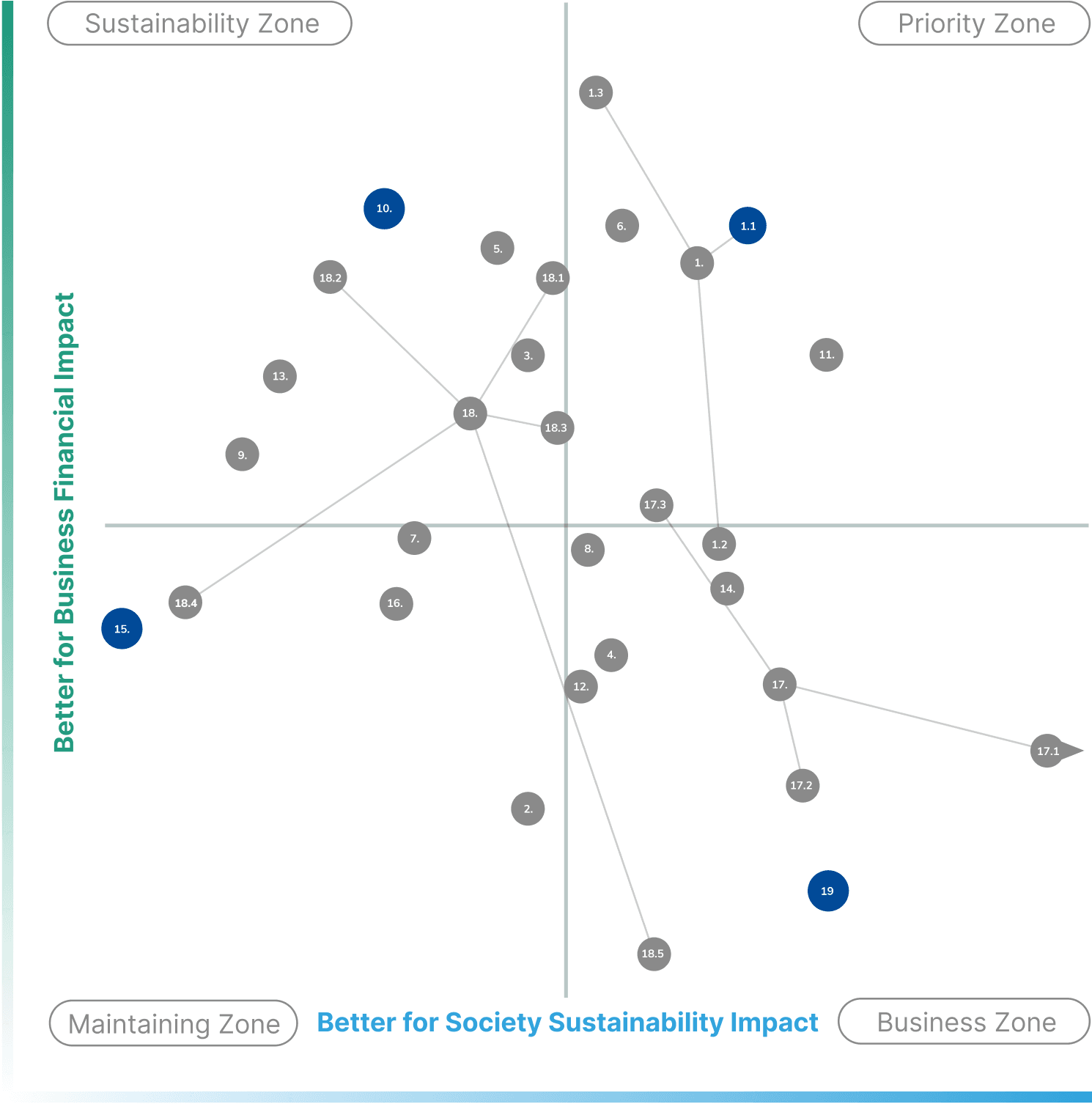
Top Materiality Topics by Concern Zone

Sustainability Zone
10
Workforce Competency
Workforce Competency is vital for TBS due to the opportunities it offers. TBS will enhance skills to support ESG initiatives and boost corporate value.

Priority Zone
1.1
Greenhouse Gas (GHG) Emissions
GHG emissions are a priority for TBS due to the energy sector's contribution to fossil fuel emissions. TBS will enhance monitoring and strategies to reduce emissions.

Maintaining Zone
15
Geopolitics
Incorporating ESG criteria into TBS's governance is crucial for resilience against geopolitical factors. TBS will implement risk management strategies and monitor geopolitical issues

Business Zone
19
Economic Performance
TBS will generate economic value for stakeholders, contributing to local economies through procurement, employment, and infrastructure investments.


Our Governance, Culture & Oversight
To ensure sustainability is embedded at every level, TBS has established an independent ESG Committee and actively builds a culture of awareness and accountability.
- ESG Committee: Supports the Board of Commissioners and Directors by guiding ESG policy, monitoring best practices, and aligning with national and international goals to ensure effective implementation of TBS2030.
- Culture of Sustainability: We foster knowledge-sharing and education across employees and leadership, including a 2023 sustainability training in Singapore for the Board of Commissioners and Directors to strengthen readiness in addressing ESG risks and opportunities.
Our ESG Committee


Yasmin Wirjawan
Chairwoman
Yasmin brings an extensive academic foundation and global experience that strengthens the ESG Committee’s strategic oversight. Her background spans finance, technology, education, and public policy—fields that directly inform a modern, impact-driven sustainability agenda. She holds a Doctor of Education in Leadership and Innovation from New York University (2024), two Master of Science degrees in Management and Systems (NYU, 2020) and Finance (Brandeis University, 2000), and a Bachelor’s in International Business Administration from the American University of Paris (1992).
Beyond her academic achievements, Yasmin leads Ancora Foundation, a non-profit focused on education and capacity building, and serves as a Visiting Scholar at the Freeman Spogli Institute for International Studies, Stanford University. Her advisory roles with Sweef Capital and Ancora Group further strengthen her perspective on responsible investment and social impact. Through these roles, she brings a balanced lens on governance, education, and ESG integration—critical for guiding TBS toward long-term, responsible growth.

Judy Lee
Member
Judy is a seasoned global risk management practitioner with more than 30 years of experience, bringing a valuable external and international perspective to the ESG Committee. Her career includes serving on the Board of Solar Frontier, a subsidiary of Showa Shell Sekiyu within the Royal Dutch Shell Group, where she contributed to scaling solar solutions for global markets.
She currently sits on the Boards of DBS Group Holdings Ltd. and DBS Bank Ltd., serving on the Audit Committee, Board Risk Management Committee, Compensation and Management Development Committee, and the Board Sustainability Committee. Judy also chairs the Board Sustainability Committee of SMRT Corporation, further underscoring her leadership in governance, climate oversight, and sustainable business practices.
Her extensive board experience across financial services, energy, and transportation provides the Committee with strong alignment to international standards, robust governance practices, and a clear understanding of sustainability-related risks and opportunities.

Triana Krisandini
Member
Triana is a corporate sustainability professional with more than a decade of experience across the forestry, natural resources, and mining sectors. She holds a Bachelor of Science in Business Administration (Finance) from the University of Oregon (2011) and a Master of International Affairs in International Finance and Economic Policy from Columbia University (2015).
Her career includes serving as Assistant Director of Sustainability at APRIL Group (2017–2021), where she developed and implemented sustainability frameworks, stakeholder engagement programs, and policy alignment across complex operations. She joined TBS Energi Utama in December 2021 as SVP Sustainability, where she leads corporate sustainability strategy, oversees climate-related initiatives, and works closely with government, financial institutions, and civil society partners.
Triana contributes operational depth, policy understanding, and practical execution capabilities to the ESG Committee—ensuring that TBS’s sustainability commitments are both credible and aligned with evolving regulatory, financial, and stakeholder expectations.
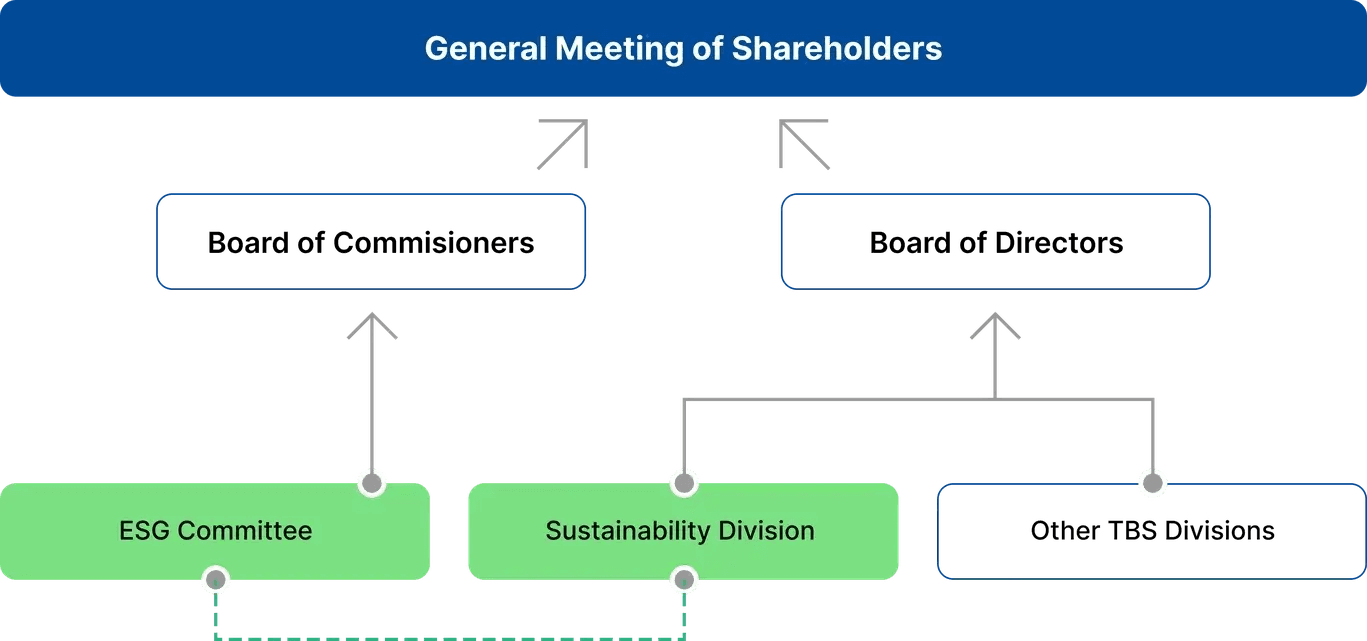
The Sustainability Division plays a key role by:
- Shaping strategy: Developing and aligning our sustainability direction with TBS2030 and ESG KPIs.
- Embedding practices: Ensuring all business units understand, implement, and report on sustainability initiatives.
- Building capacity: Providing training, knowledge-sharing, and engagement programs for employees to strengthen ESG culture.
Our Transformation Journey
TBS is undergoing a bold transformation to ensure long-term sustainability and resilience. We are gradually divesting from coal and reinvesting in future-forward businesses that accelerate the energy transition. This journey positions us as an active driver of Indonesia’s low-carbon economy while creating shared value for communities, partners, and stakeholders.
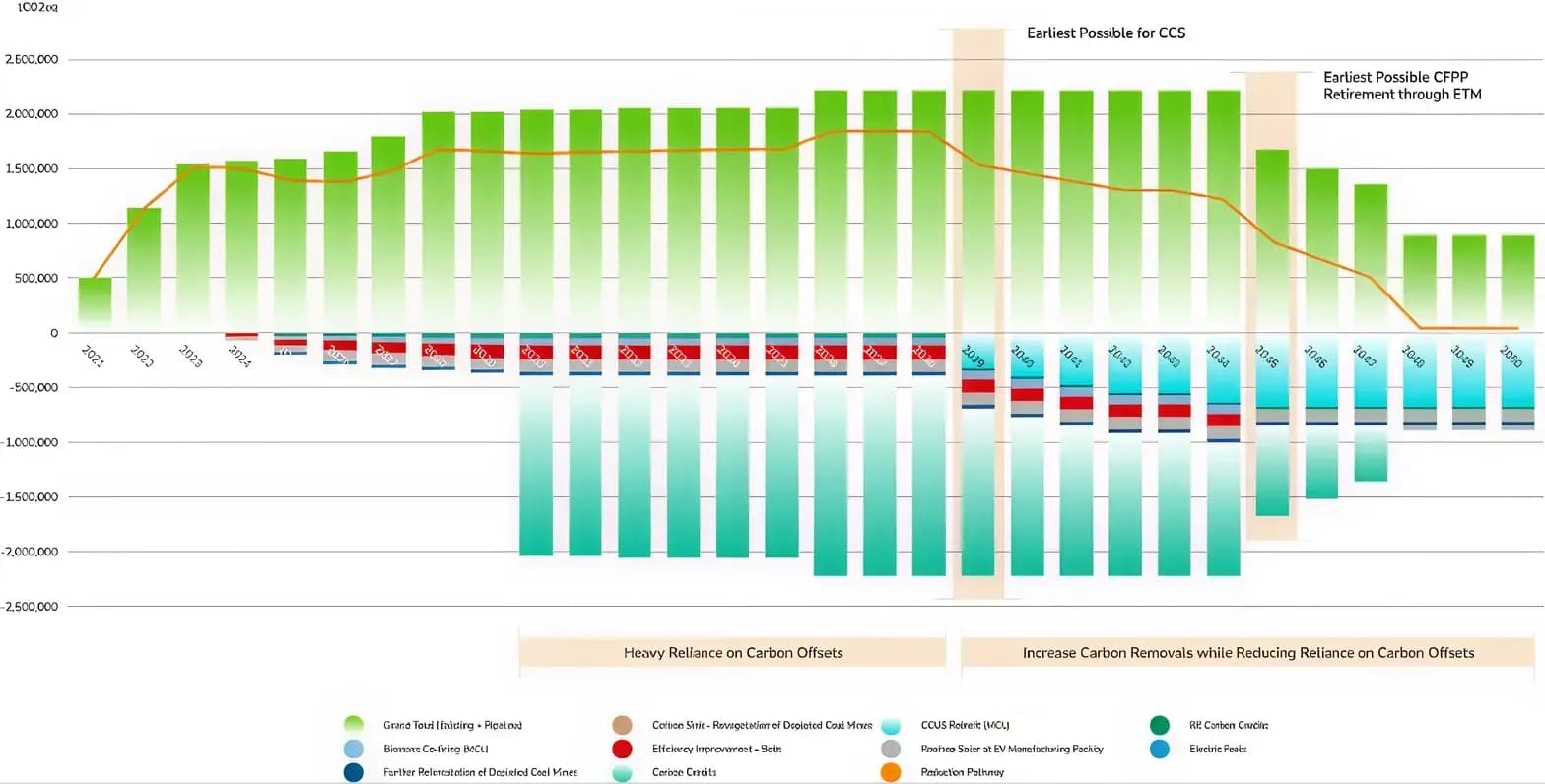
There are two approaches to achieve carbon neutrality in 2030:
- (i) accelerating the decarbonization of our assets.
- (ii) Throughout 2023, we have continued to explore innovative approaches to achieving TBS2030. Notably, these changes incorporate a heightened focus on waste management.

Waste Management
TBS is steadily advancing beyond the traditional energy sector. Demonstrating a firm commitment to solving contemporary environmental challenges, TBS has not only ventured into, but is now transforming, the waste management landscape.
Electric Vehicle
TBS is building an electric motorcycle ecosystem as part of its entire value chain transformation.
Renewable Energy
Transitioning away from legacy activities has enabled TBS to invest more into the renewable energy sector, helping to diversify and decarbonize our entire business.



