Transforming our business and the energy landscape—toward a cleaner, more resilient future.
Our Sustainability Journey
Transforming from a conventional energy business into a low-carbon growth platform.
TBS is undergoing a fundamental transformation. As the global energy transition accelerates, we are reshaping our portfolio to align with Indonesia’s climate ambitions while building resilient, future-ready businesses.
Through TBS2030 — Towards a Better Society, we are transitioning away from carbon-intensive assets and investing in scalable solutions that reduce emissions, strengthen communities, and generate long-term economic value.
Sustainability therefore sits at the center of how we operate, invest, and grow—guided by transparent governance, measurable targets, and strong partnerships across the public and private sectors.
Key Overview:
- Carbon neutrality by 2030 through the TBS2030 roadmap
- Portfolio transition toward waste management, renewable energy, and electric mobility
- ESG and climate risk fully integrated into corporate strategy and enterprise risk management
- Annual sustainability reporting aligned with leading global frameworks
TBS Climate Transition Plan
Charting a Profitable Path to a Sustainable Future
Our Climate Transition Plan (CTP) defines how TBS will achieve carbon neutrality while strengthening the resilience and profitability of our business.
The plan outlines how we are divesting high-emission assets, reallocating capital toward low-carbon sectors, and embedding climate considerations into investment decisions, risk management, and operations.
This disciplined approach enables TBS to reduce emissions while building scalable growth platforms in environmental services, clean energy, and sustainable mobility.
Key Highlights:
- ~86% reduction in operational emissions following the divestment of two coal-fired power plants.
- Carbon neutrality target by 2030.
- US$600 million investment plan to accelerate low-carbon businesses.
- US$283 million already deployed as of Q1 2025.
- Waste management now contributing 39% of consolidated revenue and 88% of adjusted EBITDA.
Explore the full TBS Climate Transition Plan to see more of the impact we created across all three pillars.
Our Approach to Sustainability
Embedding ESG into every decision we make
Sustainability at TBS is embedded across the entire organization, from Board oversight to operational decision-making.
Our ESG governance framework ensures that environmental, social, and governance considerations are integrated into investment decisions, enterprise risk management, and long-term strategy.
By aligning our disclosures with international standards and maintaining transparent stakeholder engagement, we ensure that our sustainability commitments remain credible, measurable, and accountable.
Key Highlight:
- ESG governance oversight at Board, ESG Comittee, and managements levels
- TBS2030 as the strategic roadmap guiding sustainability commitments
- Climate risk assessment aligned with TCFD and IFRS S2
- Sustainability reporting aligned with GRI, SASB, and OJK regulations
- Structured stakeholder engagement and transparent disclosures

ESG Comittee
Strengthening oversight of our sustainability commitments.
TBS established the ESG Committee in 2023 to support the Board of Commissioners in overseeing the implementation of the Company’s sustainability strategy.
Working independently and professionally, the committee reviews sustainability policies, strategies, and targets while providing recommendations to the Board of Directors on ESG-related decisions. The committee also monitors the implementation of ESG initiatives across the TBS Group to ensure alignment with the TBS2030 roadmap and our carbon neutrality ambition.
Key Responsibilities
- Review sustainability policies, strategies, and targets
- Provide recommendations on ESG-related initiatives and disclosures
- Monitor implementation of ESG programs across the Group
- Assess ESG performance and identify opportunities for improvement
- Report ESG progress and recommendations to the Board of Commissioners
Our ESG Comittee


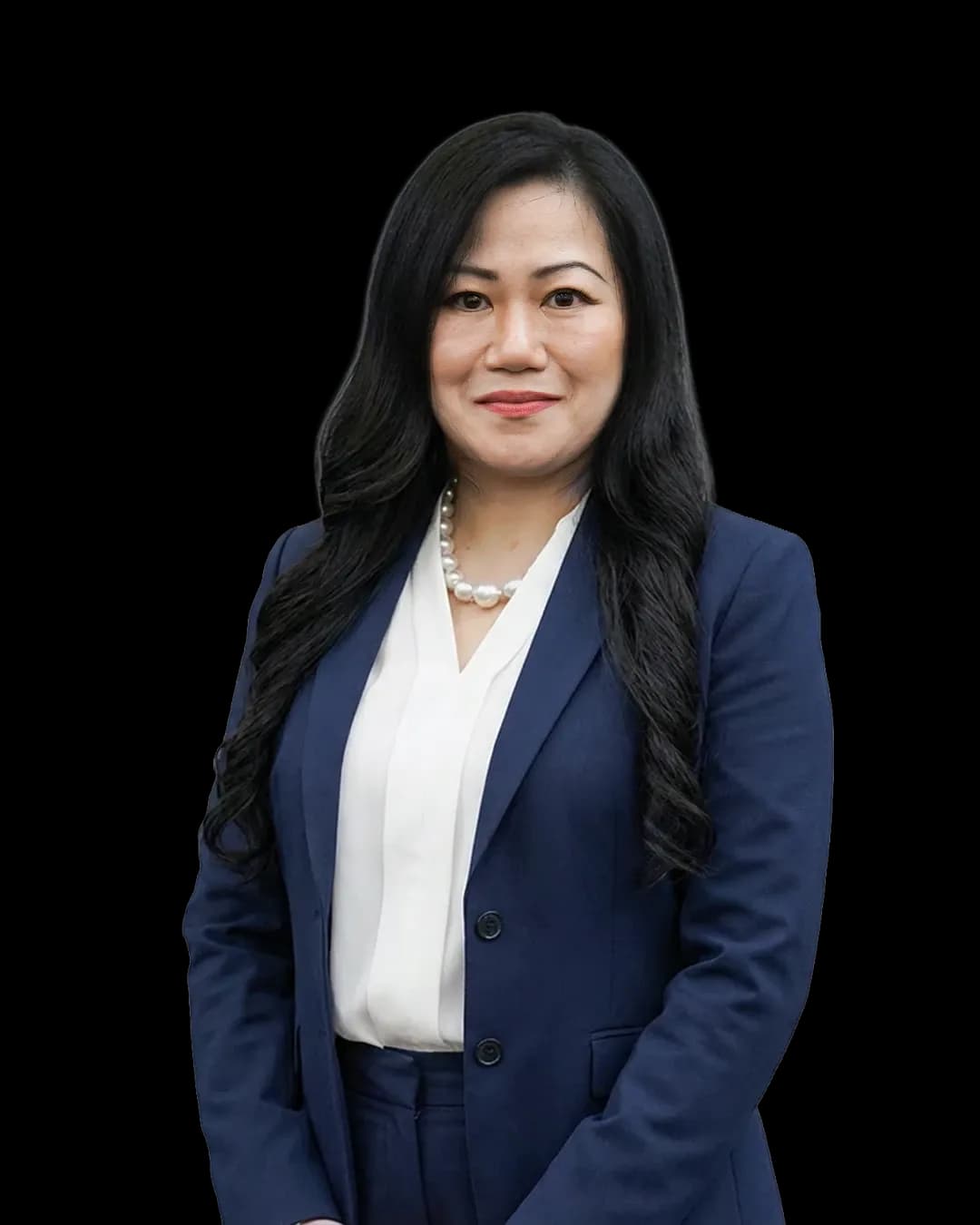
Yasmin Wirjawan
ESG Committee - Chairwoman
Yasmin brings an extensive academic foundation and global experience that strengthens the ESG Committee’s strategic oversight. Her background spans finance, technology, education, and public policy—fields that directly inform a modern, impact-driven sustainability agenda. She holds a Doctor of Education in Leadership and Innovation from New York University (2024), two Master of Science degrees in Management and Systems (NYU, 2020) and Finance (Brandeis University, 2000), and a Bachelor’s in International Business Administration from the American University of Paris (1992).
Beyond her academic achievements, Yasmin leads Ancora Foundation, a non-profit focused on education and capacity building, and serves as a Visiting Scholar at the Freeman Spogli Institute for International Studies, Stanford University. Her advisory roles with Sweef Capital and Ancora Group further strengthen her perspective on responsible investment and social impact. Through these roles, she brings a balanced lens on governance, education, and ESG integration—critical for guiding TBS toward long-term, responsible growth
Judy Lee
ESG Committee - Member
Judy is a seasoned global risk management practitioner with more than 30 years of experience, bringing a valuable external and international perspective to the ESG Committee. Her career includes serving on the Board of Solar Frontier, a subsidiary of Showa Shell Sekiyu within the Royal Dutch Shell Group, where she contributed to scaling solar solutions for global markets.
She currently sits on the Boards of DBS Group Holdings Ltd. and DBS Bank Ltd., serving on the Audit Committee, Board Risk Management Committee, Compensation and Management Development Committee, and the Board Sustainability Committee. Judy also chairs the Board Sustainability Committee of SMRT Corporation, further underscoring her leadership in governance, climate oversight, and sustainable business practices.
Her extensive board experience across financial services, energy, and transportation provides the Committee with strong alignment to international standards, robust governance practices, and a clear understanding of sustainability-related risks and opportunities.

Triana Krisandini
ESG Committee - Member
Triana is a corporate sustainability professional with more than a decade of experience across the forestry, natural resources, and mining sectors. She holds a Bachelor of Science in Business Administration (Finance) from the University of Oregon (2011) and a Master of International Affairs in International Finance and Economic Policy from Columbia University (2015).
Her career includes serving as Assistant Director of Sustainability at APRIL Group (2017–2021), where she developed and implemented sustainability frameworks, stakeholder engagement programs, and policy alignment across complex operations. She joined TBS Energi Utama in December 2021 as SVP Sustainability, where she leads corporate sustainability strategy, oversees climate-related initiatives, and works closely with government, financial institutions, and civil society partners.
Triana contributes operational depth, policy understanding, and practical execution capabilities to the ESG Committee—ensuring that TBS’s sustainability commitments are both credible and aligned with evolving regulatory, financial, and stakeholder expectations.
TBS2030 Roadmap
Our pathway to carbon neutrality by 2030
TBS2030 is our long-term sustainability roadmap designed to balance growth with climate responsibility. It reflects our ambition to support Indonesia’s energy transition by pivoting toward cleaner, low-carbon, and circular business models.
Anchored on three strategic pillars: Thriving Environment, Empowered People, and Trusted Partner, TBS2030 guides how we decarbonize our portfolio, strengthen community partnerships, and uphold the highest standards of governance.
We are driving transformation towards a better society by 2030 through:

Thriving Environment
Working towards carbon neutrality in 2030 through diversification away from being a fossil fuel-based business, mobilizing climate finance, and reducing our overall environmental impact.

Empowered People
Championing a culture of safety, health, and wellbeing through empowering our people, while ensuring a just transition for the communities where we operate.

Trusted Partner
Engaging with a wide range of stakeholders - from internal employees through to industry associations - to help us realize our sustainability goals.
Download Our TBS2030 Commitment
Sustainability Reports
Transparency and accountability, year after year.
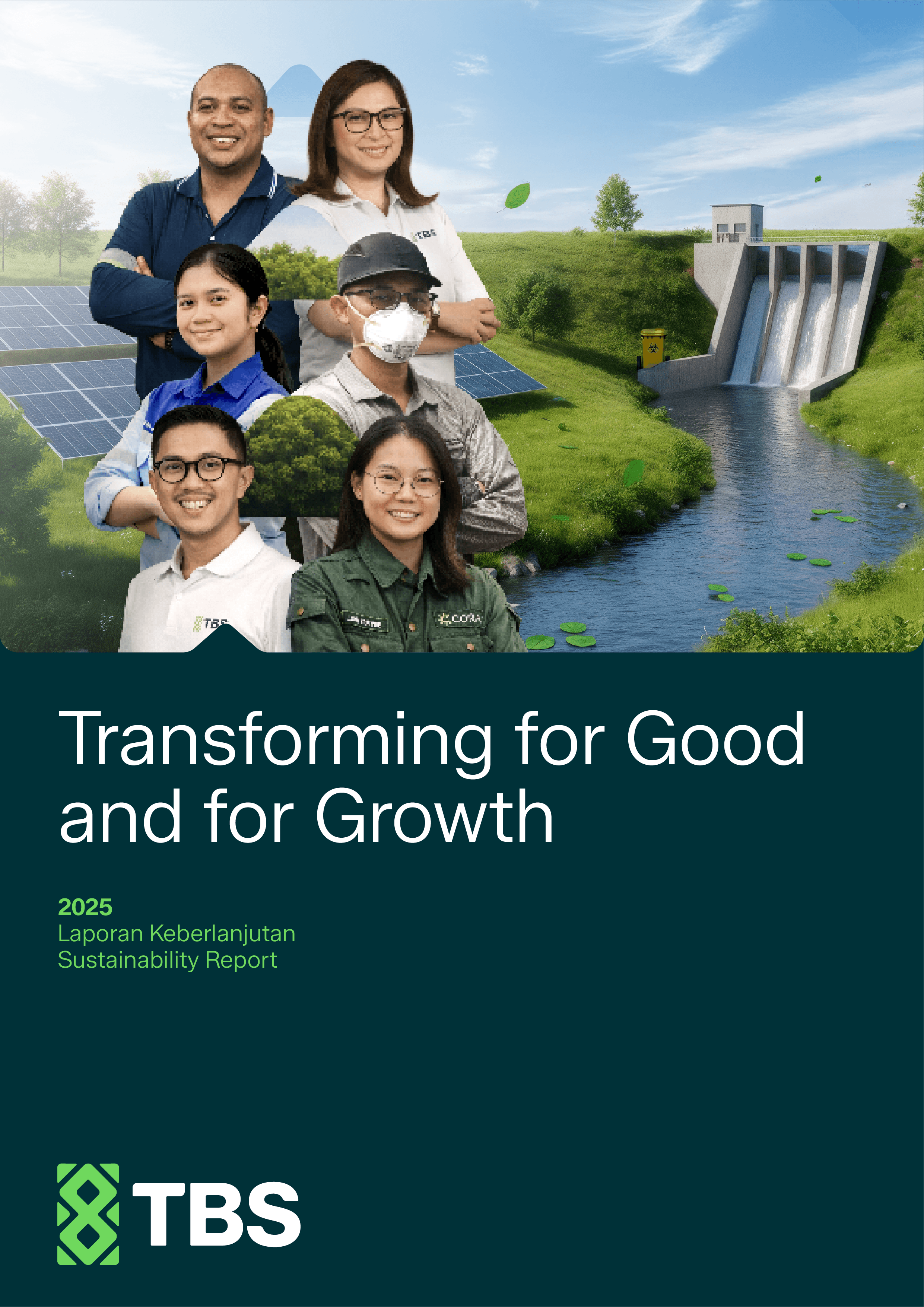
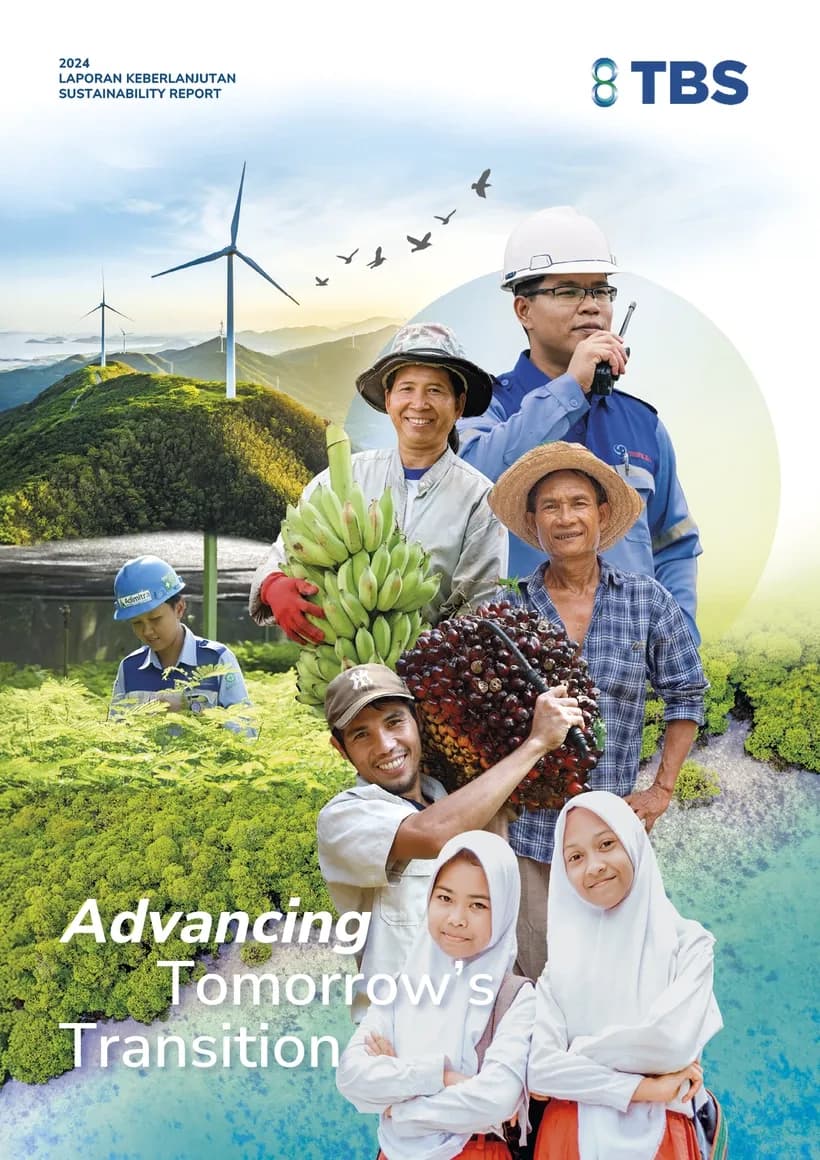
Transparency is the cornerstone of our sustainability strategy. Each year, we publish sustainability reports that provide stakeholders with a clear view of our progress, challenges, and future goals. These reports are aligned with international standards, ensuring credibility and comparability in tracking our ESG commitments and TBS2030 roadmap.
Our sustainability reports
.webp&w=1920&q=75)
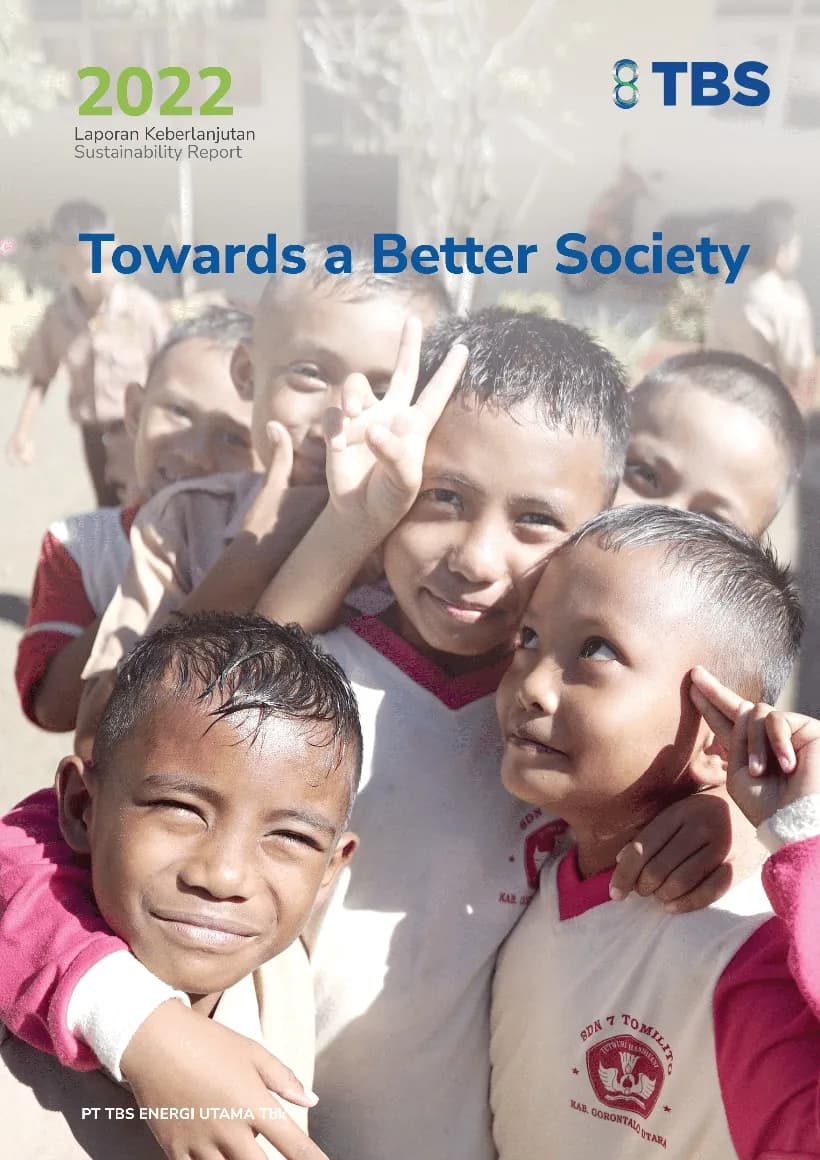
Explore our full sustainability reports to see our commitment to transparency and accountability
TBS Foundation
Empowering Education, Sustainability & Innovation

TBS Foundation is committed to creating lasting impact by empowering education, driving sustainability, and nurturing innovation. Through targeted programs and strategic partnerships, we equip future leaders, influence policy, and support early-stage solutions that accelerate Indonesia’s transition to a sustainable and circular economy.
Key Highlight:
- Education for Impact: Vocational training, teacher development, and student scholarships
- Sustainability Leadership: Policy reforms, awareness campaigns, and public engagement
- Catalyzing Innovation: Supporting early-stage enterprises in EVs, waste, and renewable energy